5 minutes
/
Why IT recruitment agencies lose critical hires, and it's not about sourcing

Abhimanyu Roat
Co-founder & CEO
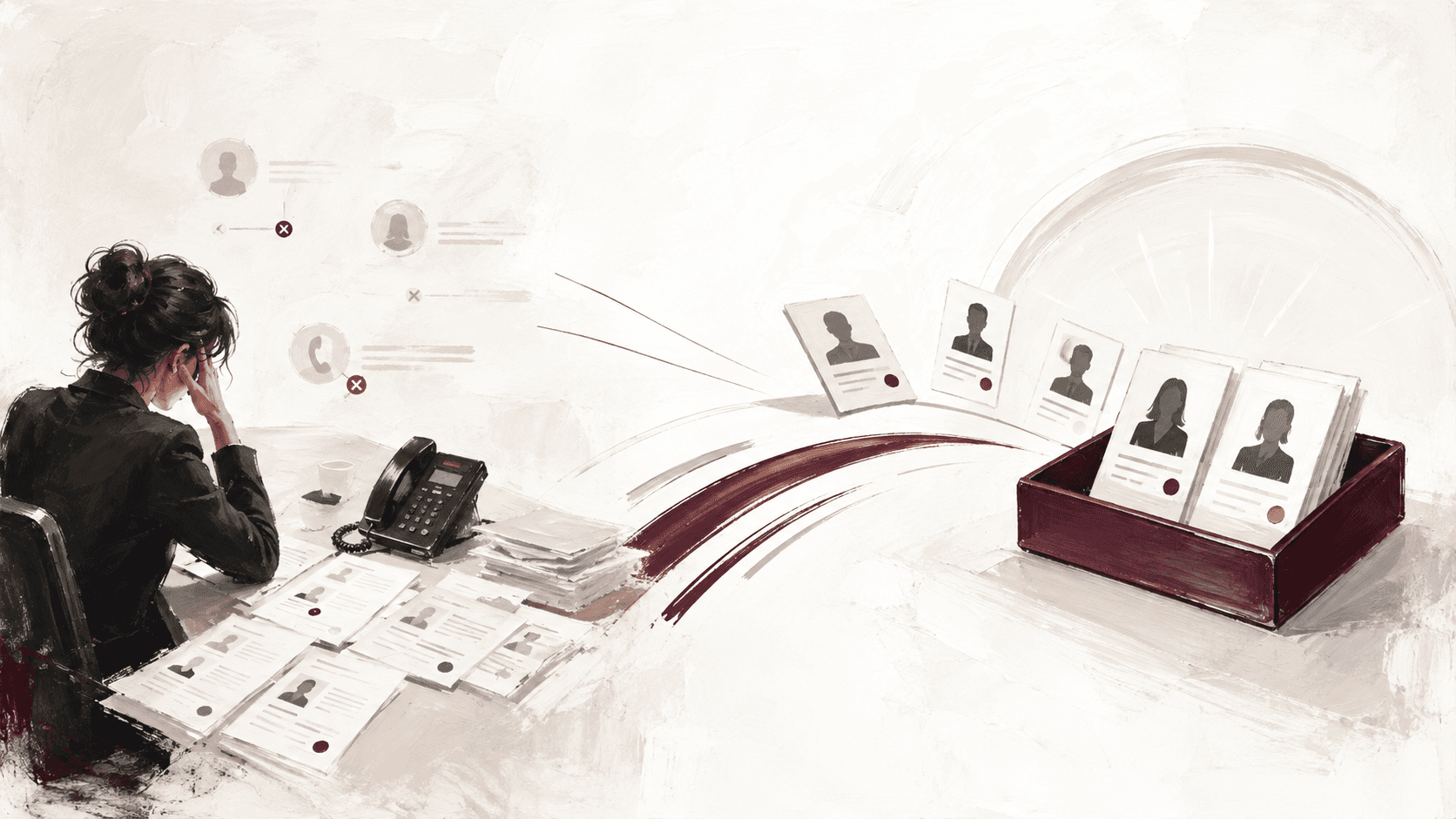
I've been on the phone with recruitment agency founders almost every day for the last several months. Over 110 of them across India, IT boutiques, generalist shops, blue collar volume players, and one IPO-bound staffing giant with thousands of recruiters on its rolls.
Before I can even explain what Recruit Bud does, most of them say some version of the same thing: "I already knew this was a problem. I just didn't know anyone was working on it."
That line stopped surprising me around agency number thirty. By agency number eighty, I started leading with it.
The loss that actually stings
When I ask founders about the last critical hire they lost, the story is almost always the same.
JD came in. They knew exactly who to call, they had the right people in their database, people they'd placed before or stayed in touch with. They started screening. Calls went to voicemail. Someone picked up but had a 90-day notice. Someone else was interested but their CTC expectation was 40% above the client's band. By the time they had three names worth sending, the client had already moved forward with another agency's shortlist.
Not because the other agency was better. Because the other agency sent names first.
What I find genuinely hard about this, and what I think makes it sting more than a regular lost deal, is that the founder knows they had the right candidates. They've spent years building relationships with these people. They understand the client's team culture. They know which cloud architect will actually stay past 6 months and which one is just shopping for a counter-offer. That knowledge is real and it took years to build.
But none of it shows up if your shortlist arrives two days late.
The math nobody sits down to actually do
Here's the moment in most of my conversations where things get quiet.
A recruiter doing screening calls, checking availability, notice period, CTC expectations, whether someone's listed Spark experience is genuine or a one-week project from three years ago, gets through eight to twelve candidates on a good day. A good day, meaning people actually pick up, calls don't run long, no one needs to be called back three times.
For a 25-candidate brief on a critical hire, that's two to three days of focused screening work. And that's assuming the recruiter isn't also managing four other open JDs simultaneously, which they almost always are.
In my conversations with agency owners, the client's patience on a critical hire runs out somewhere around day four or five. That's when "we're still working on it" starts to cost you not just this placement but the next call too.
The agencies I've seen consistently win these roles haven't found a better sourcing strategy. They've taken manual screening off the critical path entirely.
What AI screening actually does — because "AI does it" means nothing
Every founder I talk to wants to know exactly what happens to their candidates. Fair question. Here's the actual workflow:
Step 1: Share the JD and candidate list.
A brief and a list of 30-50 candidates. Ten minutes of work, no integration, nothing to install.
Step 2: The AI calls each candidate by voice.
Not email, not a form, a real phone call. The AI introduces itself as a screening assistant for the role, explains what it's looking for, and works through the questions that matter: availability, notice period, current and expected CTC, and role-specific technical context. If someone doesn't pick up, it follows up automatically.
Step 3: Anything unusual gets flagged.
If a candidate mentions a competing offer, a relocation constraint, or something that doesn't match their resume, it gets flagged with the exact quote from the call. The recruiter decides what to do with it, not the AI.
Step 4: Ranked report by next morning.
Every candidate summarised: what they said, where they fit, where the gaps are, ranked against the JD. A recruiter reads the whole thing in 30–40 minutes.
Step 5: Your recruiter calls the top four or five.
The human conversation happens where it should — with candidates who are available, interested, and apparently qualified. Not with all 25.
One founder I spoke to recently said: "I used to dread Monday mornings with a big brief open. Now I just read the report with my coffee." That's the shift I keep seeing.
Why IT lateral is actually the right place to start
I want to be honest about this: not every hiring context is equally suited to what we've built. Blue collar and volume hiring has its own dynamics that we handle differently.
But IT lateral — the 4–8 year experienced professional band, the cloud architects, data engineers, full-stack leads — is a genuinely strong fit for a specific reason that most people don't think about immediately.
These candidates are professionals. They're used to being evaluated. They know how to talk about what they've built, they have clear opinions about what they want, and they take the screening call seriously. The AI conversation goes well because the candidate on the other end treats it like a professional process.
The JDs are also structured enough to actually screen against. A Senior Data Engineer role has clear technical requirements, obvious seniority markers, and a predictable set of qualification questions. Compare that to a role where the criteria are vague or deeply subjective — this is the clean version of the problem.
What I keep hearing from recruiters after the first pilot: they already had a sense of which candidates were worth talking to. The report just let them act on that instinct same-day instead of three days later.
If you want to try it on one role
One live JD you're currently working. Fifteen to twenty candidate profiles. We run it overnight, you get the ranked report in the morning.
No contract, no onboarding, no commitment beyond sharing the brief. You just see what your recruiter would have spent two or three days on, done while you slept.
If you look at the output and don't immediately know who you're calling first, we haven't done our job.
If you have something open right now, reply and we'll start there.
Share this post


